If You Touch Yourself, Do It Right
di paola latina
Medals Won
- 🥉 BRONZE – Campaign Under U$D 250K
- 🥉 BRONZE – Best Experiential / Out of Home
Campaign Overview
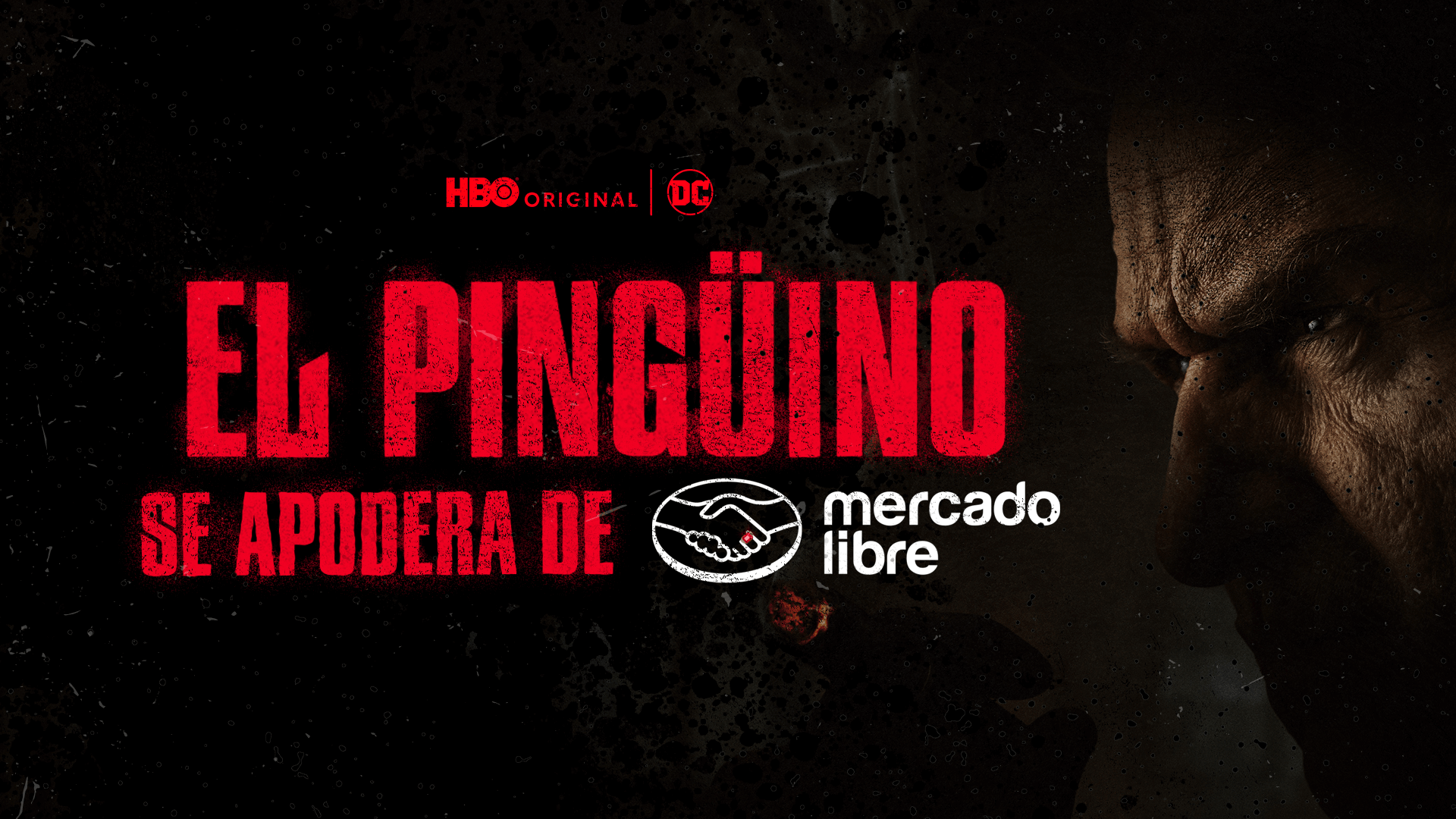
In Argentina, the superstition of “la mufa” is automatic: when bad luck is mentioned, people instinctively touch their left testicle or left breast. With the release of Prime Video’s series about former president Carlos Menem—whose name famously triggers this reflex—the gesture returned nationwide at full scale, flooding media, memes, and city streets.
Together with NGO Pura Vida, the team intercepted that reflex and turned it into a life-saving message: if everyone was already touching themselves, they should do it right—by performing a self-exam for breast and testicular cancer. With zero budget and perfect cultural timing, the campaign transformed a national superstition into a mass prevention movement, driven entirely by organic amplification.
Creative Concept
The campaign modernized a cultural superstition by transforming a well-known joke into a public-health intervention. It reframed the gesture from inviting bad luck to protecting your life, using the humor and nostalgia already embedded in the series to deliver a message that felt familiar, timely, and impossible to ignore.
• Cultural Re-Signification: Instead of fighting the superstition, the campaign hijacked it—turning “touching yourself for bad luck” into “touching yourself for health,” repurposing a national inside-joke as a screening reminder.
• Humor as Recall Engine: The work adopted the same comedic tone, visual style, and self-aware language of the series, ensuring the message felt native to the cultural moment rather than imposed onto it.
• Seamless World-Building: By mirroring the show’s universe—its characters, gestures, and iconic phrasing—the campaign blurred the line between entertainment and prevention, embedding a medical call-to-action into fan behavior.
• Provocation With Purpose: The line “If you touch yourself, do it right” delivered a double-meaning punch: bold enough to spark conversation, clear enough to drive action, and culturally fluent enough to spread organically.
Execution Strategy
Cultural Hijack: Timed to launch the moment the series premiered, the activation piggybacked on peak national attention and instantly plugged into the cultural conversation already unfolding.
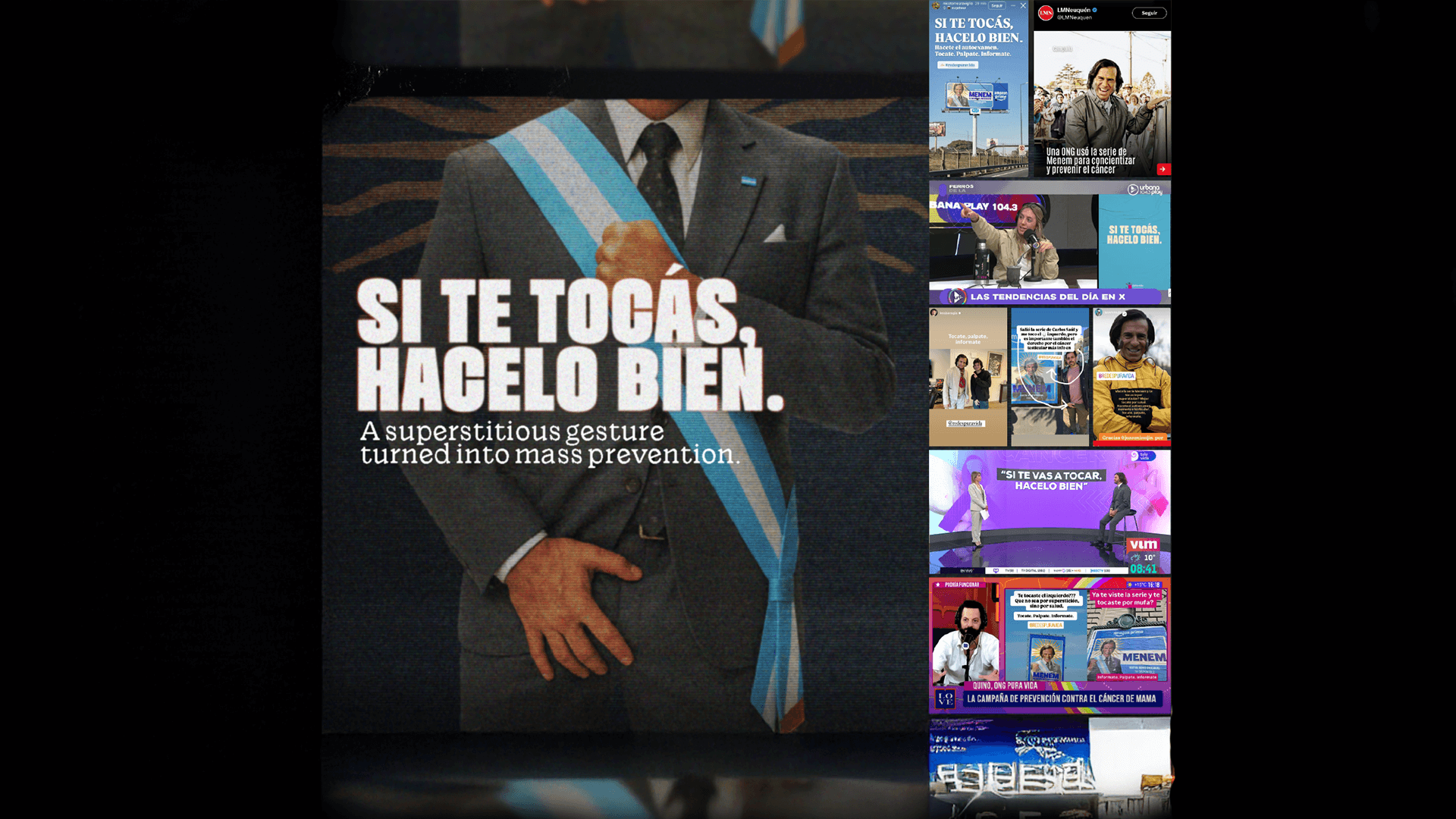
OOH & Street Media: The message appeared wherever Menem posters surfaced—walls, kiosks, and high-traffic hotspots—mirroring the show’s visual universe and embedding itself directly into the cultural geography of the moment.
Social & Meme Integration: The campaign entered trending conversations in real time, adopting the humor, cadence, and visual language fans were already using—ensuring relevance without paid amplification.
Influencer & Journalist Activation: Media figures, cultural commentators, and creators already discussing the series were invited to extend the message organically, turning existing discourse into distribution.
Cast Participation: Actors and creators from the show became unexpected carriers of the message, collapsing the distance between fiction and public health and accelerating cultural spread.
$0 Media Investment: The campaign relied entirely on organic behavior—no paid placements—allowing cultural momentum to become the media engine.
The campaign didn’t chase attention—it infiltrated what already had it.
Impact and Results
The campaign delivered remarkable results:
• 29M people reached organically, demonstrating nationwide penetration without paid amplification.
• 110+ media outlets and influencers joined voluntarily, validating the message’s cultural relevance and social sticking power.
• $237M in earned media, showcasing extraordinary amplification driven purely by public and press momentum.
• 60%+ of the country exposed to the message, confirming widespread national visibility across demographics and regions.
• Nationwide TV, radio, and digital coverage explained the self-exam live, turning broadcasters into real-time health educators.
• Hundreds of people reported performing their first-ever self-exam, proving direct behavioral impact and life-saving potential.
Why It Worked
The campaign succeeded because it fused public health data with a deep cultural reflex. It didn’t preach—it played along. By using humor, superstition, nostalgia, and perfect timing, the message traveled faster than any traditional prevention campaign ever could. It transformed an irrational gesture into a rational life-saving act—and proved that in Argentina, even superstition can save lives.
Client
Pura Vida
Agency Name
di paola latina
Categories
Campaign Under USD 250K